Overview
AI doesn’t have taste. It doesn’t understand brand strategy or know whether something will truly resonate with your audience. It can generate endless options - but it can’t decide what’s right. That responsibility belongs to the human creative director. In AI assisted work, judgment matters more than ever.
Challenge
Maintaining clear creative authorship and brand consistency while working with systems that generate high volumes of unpredictable outputs. AI can produce countless variations quickly, but without strong direction, the results can become inconsistent, generic, or misaligned with the brand.
The task was to design a workflow that balanced exploration with control - knowing when to push for more variation, when to refine, and when to stop - while ensuring every asset felt cohesive, intentional, and strategically on-brand.
The task was to design a workflow that balanced exploration with control - knowing when to push for more variation, when to refine, and when to stop - while ensuring every asset felt cohesive, intentional, and strategically on-brand.
Approach
I built a complete AI-powered production system for 2 brand campaigns using FLORA as the central orchestration platform. By selecting the right tool for each task and chaining them into a structured workflow, I transformed standard inputs into a full campaign asset suite - complete with quality gates to ensure consistent, optimized results at scale.
Process
I began by using a text model and curated reference images to explore multiple brand concepts and visual directions. Once the prompts were refined, I generated hero campaign imagery primarily with Nano Banana for its strength in stylized yet photorealistic results and used Recraft to develop the logo system. I iterated extensively to ensure visual consistency, narrative cohesion, and brand alignment. The final stage was video production using Kling, leveraging image-to-video for precise frame control, and the high-quality exports were then brought into Canva to create the final social media videos.
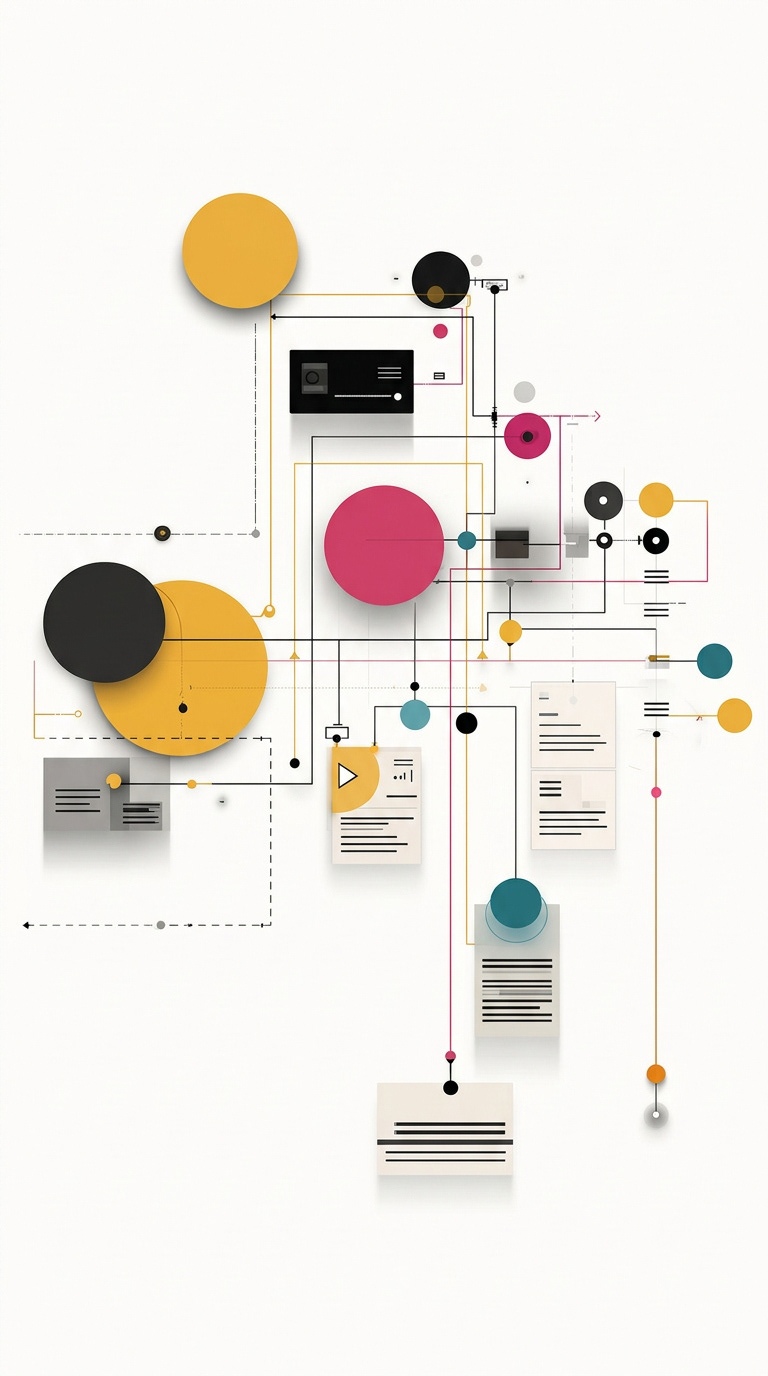
The workflow followed a linear structure: Inputs → Generation → Refinement → Review → Export - with 3 built-in quality gates at the prompt, image draft, and video stages to maintain creative standards before final delivery.
The workflow followed a linear structure: Inputs → Generation → Refinement → Review → Export - with 3 built-in quality gates at the prompt, image draft, and video stages to maintain creative standards before final delivery.
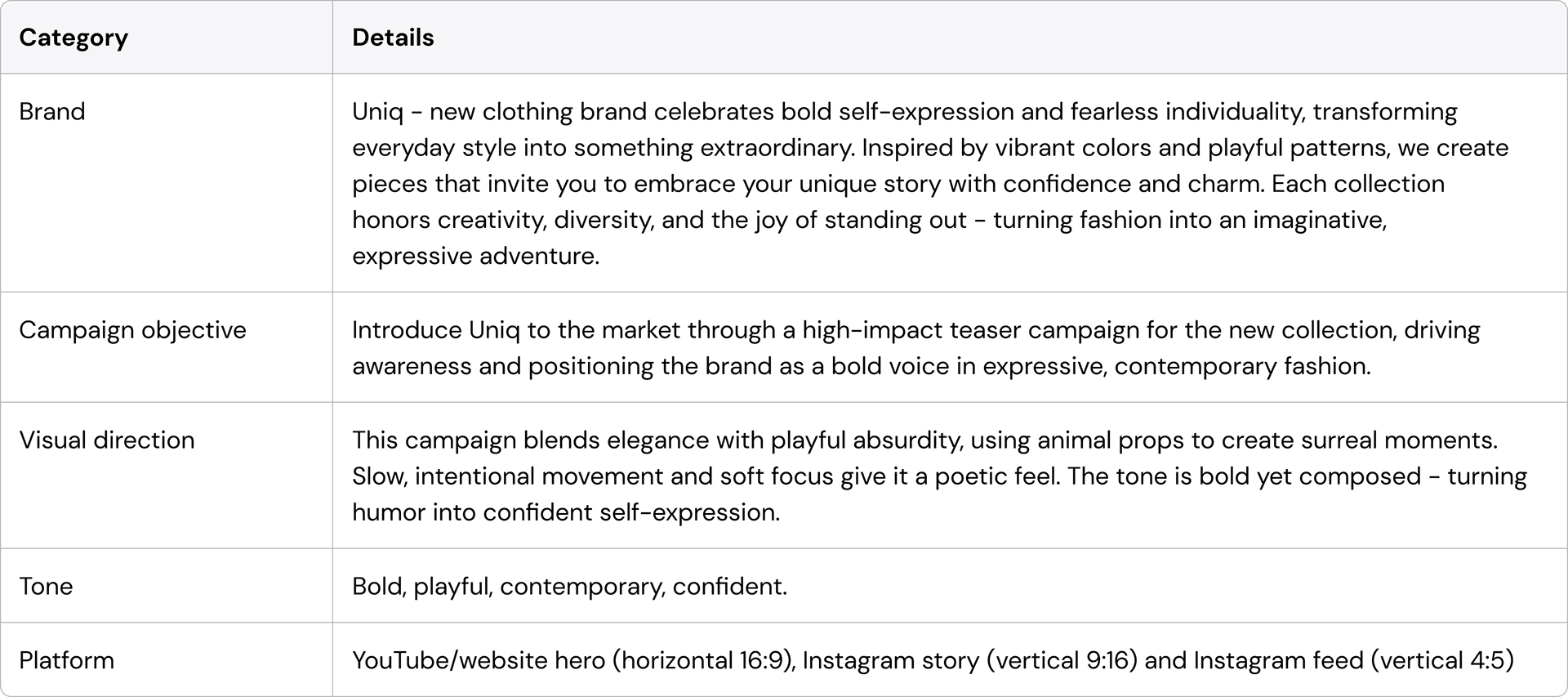
Uniq brand & campaign concept
sajg
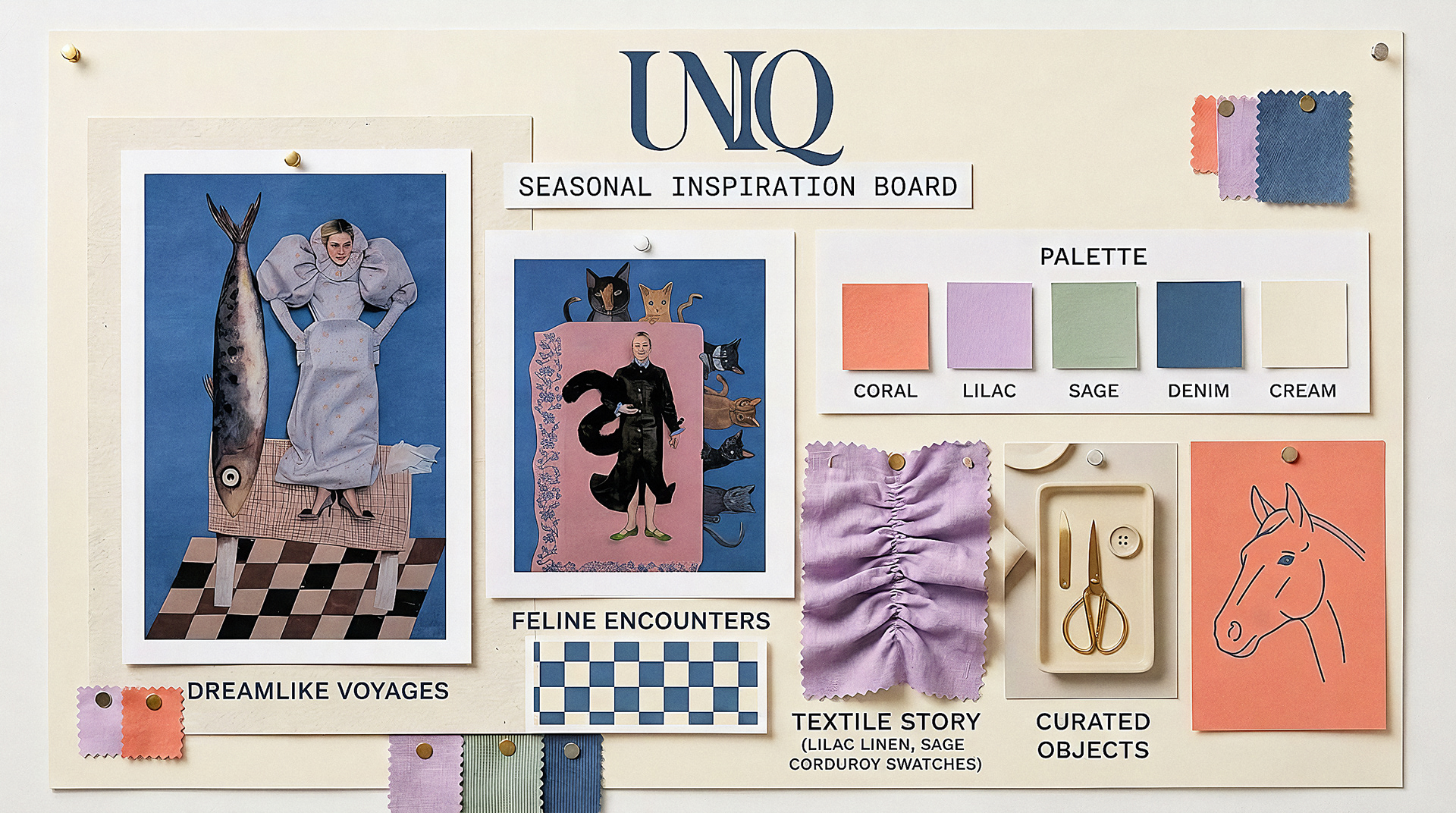
Visual system - Mood board
Using this style references, color palette, and brand concept outlined on the previous page, I developed the initial creative outputs.
Keyframe hero images
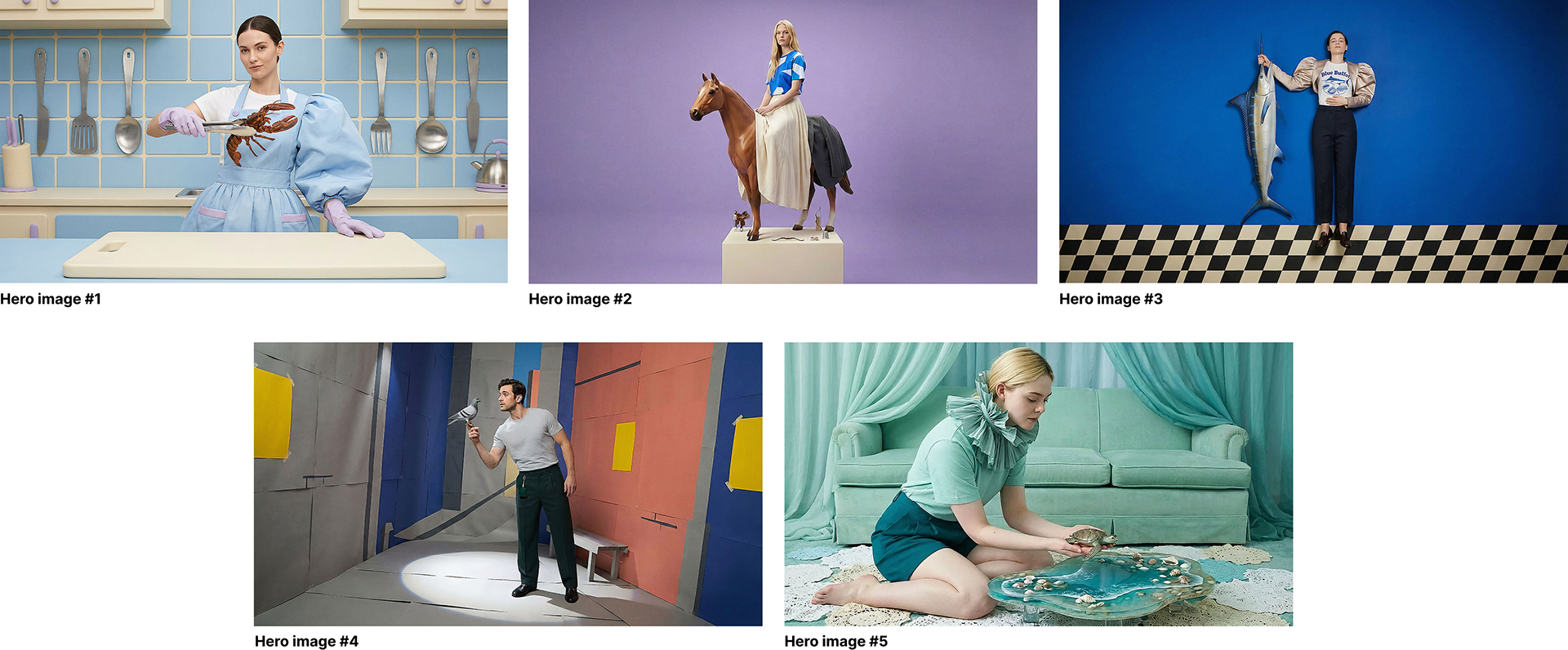
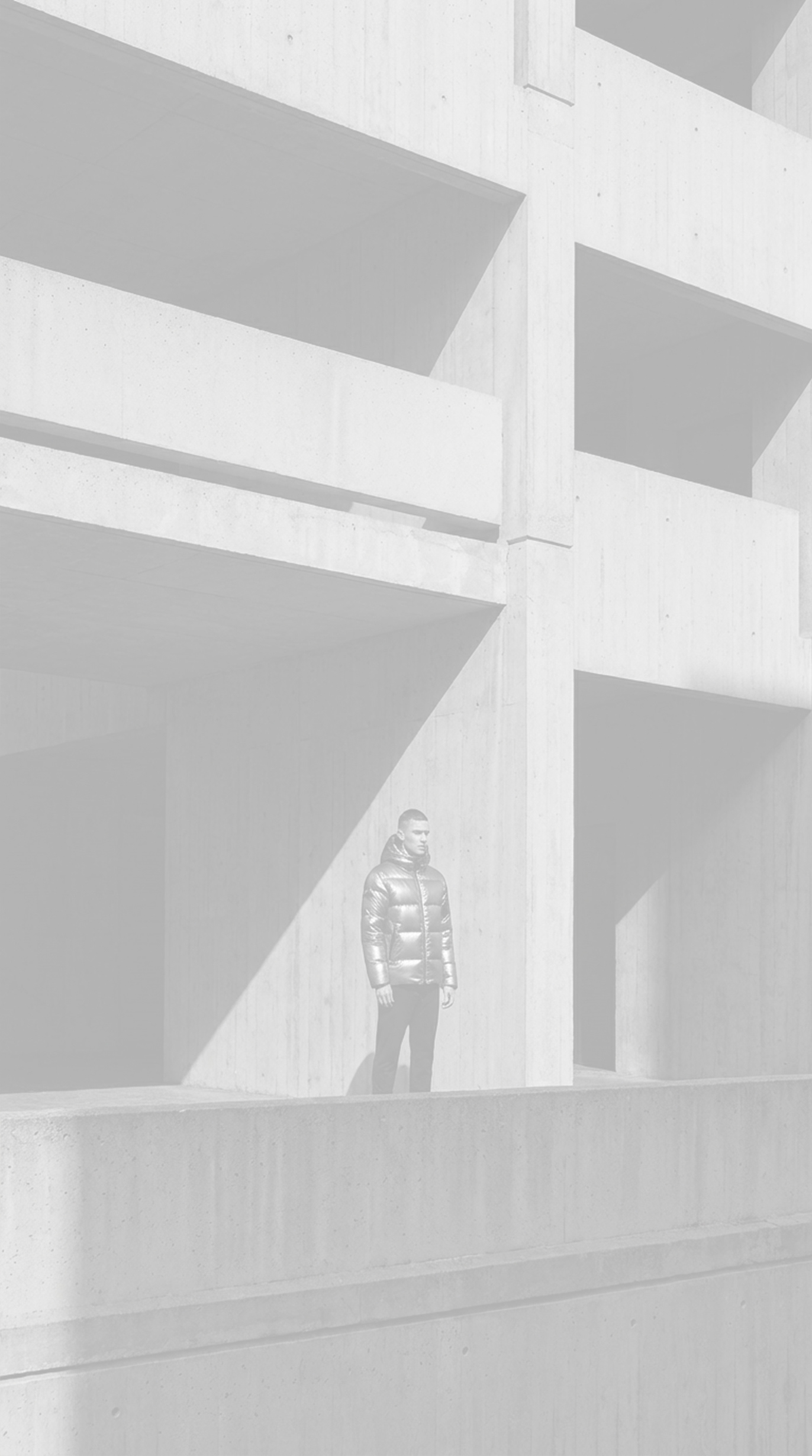
I generated five hero campaign images using Nano Banana and iterated extensively to ensure visual consistency, narrative cohesion, and strong brand alignment.
Video brief
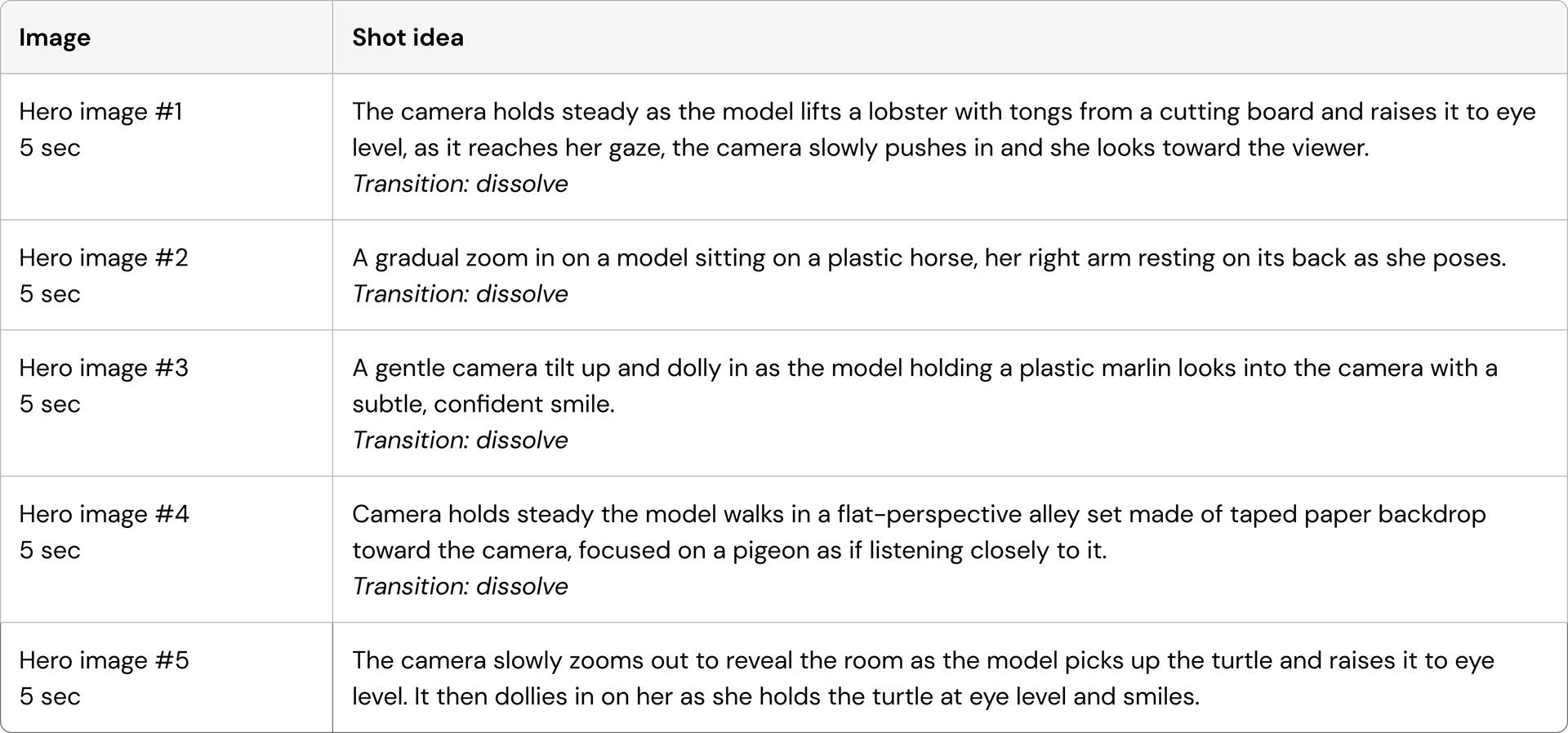
Having consistent, finalized still frames allowed me to focus on animating them with intention - carefully refining the camera movement, subject motion, environmental dynamics, and transitions between scenes.
I aimed for smooth, controlled camera movements that enhanced each still rather than overpowering it, reinforcing the brand’s bold, playful and contemporary aesthetic.
I aimed for smooth, controlled camera movements that enhanced each still rather than overpowering it, reinforcing the brand’s bold, playful and contemporary aesthetic.
It took several iterations and prompt refinements to achieve animations that aligned with my vision. Once satisfied, I uploaded the videos to Canva to finalize the edit - adding seamless transitions, integrating taglines and logo, and selecting music that complemented the visual energy and tone of the brand.
Shot list
Deliverables
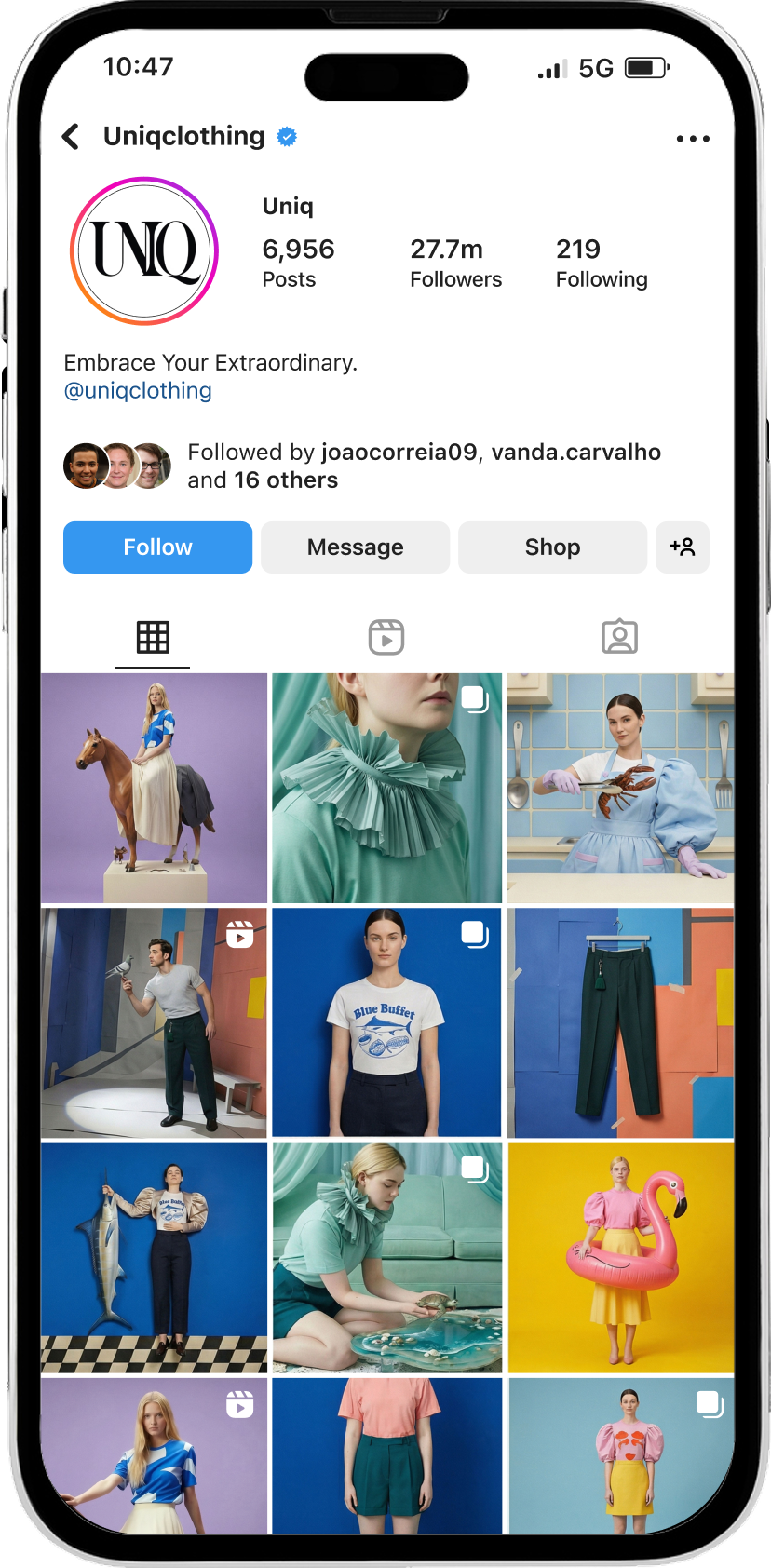
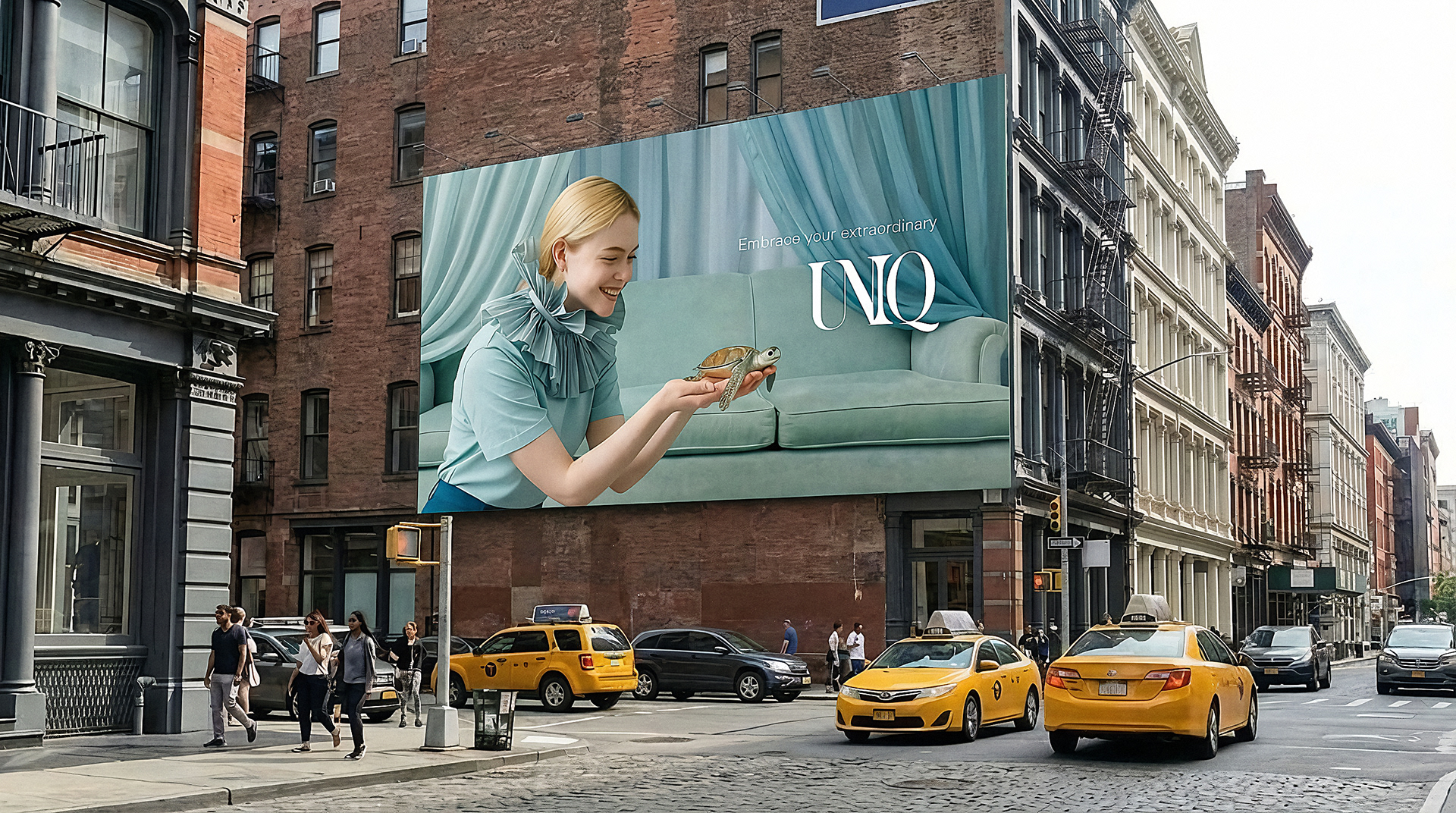
I produced a full set of high resolution hero images and videos, optimized across multiple formats/social media crops while maintaining a consistent visual identity and ensuring all key elements remained properly framed in each crop.
YouTube / Website Hero: 16:9 horizontal (1920 × 1080 px)
Instagram Feed: 4:5 vertical (1080 × 1350 px)
Instagram Stories / Reels: 9:16 vertical (1080 × 1920 px)
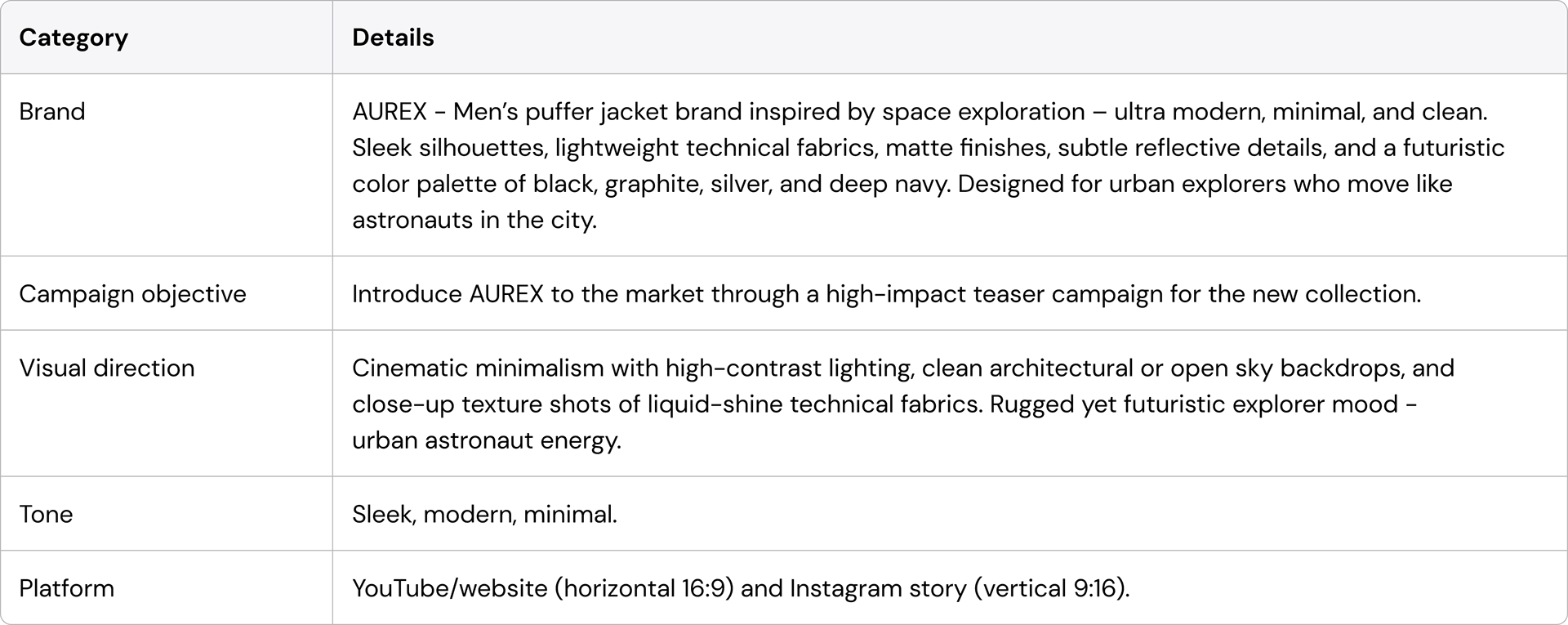
AUREX brand & campaign concept
Learnings
This project reinforced that creative direction in AI is about designing the system, not just generating outputs. By building a complete production workflow - one that takes standard inputs and produces a full campaign asset suite with built-in quality gates and documentation - I created a repeatable process that maintains brand integrity while significantly reducing time and cost compared to a fully manual production. The structure makes the work scalable, consistent, and transferable to other collaborators.
More importantly, the project demonstrated that professional AI work isn’t just about knowing how to use individual tools. It’s about designing systems that make those tools reliable, strategic, and scalable. The real value comes from orchestration - defining when to explore, when to refine, and where to apply human judgment. In that sense, the creative director’s role evolves from asset maker to system designer, ensuring AI becomes a practical engine for real-world campaign production.
More importantly, the project demonstrated that professional AI work isn’t just about knowing how to use individual tools. It’s about designing systems that make those tools reliable, strategic, and scalable. The real value comes from orchestration - defining when to explore, when to refine, and where to apply human judgment. In that sense, the creative director’s role evolves from asset maker to system designer, ensuring AI becomes a practical engine for real-world campaign production.